
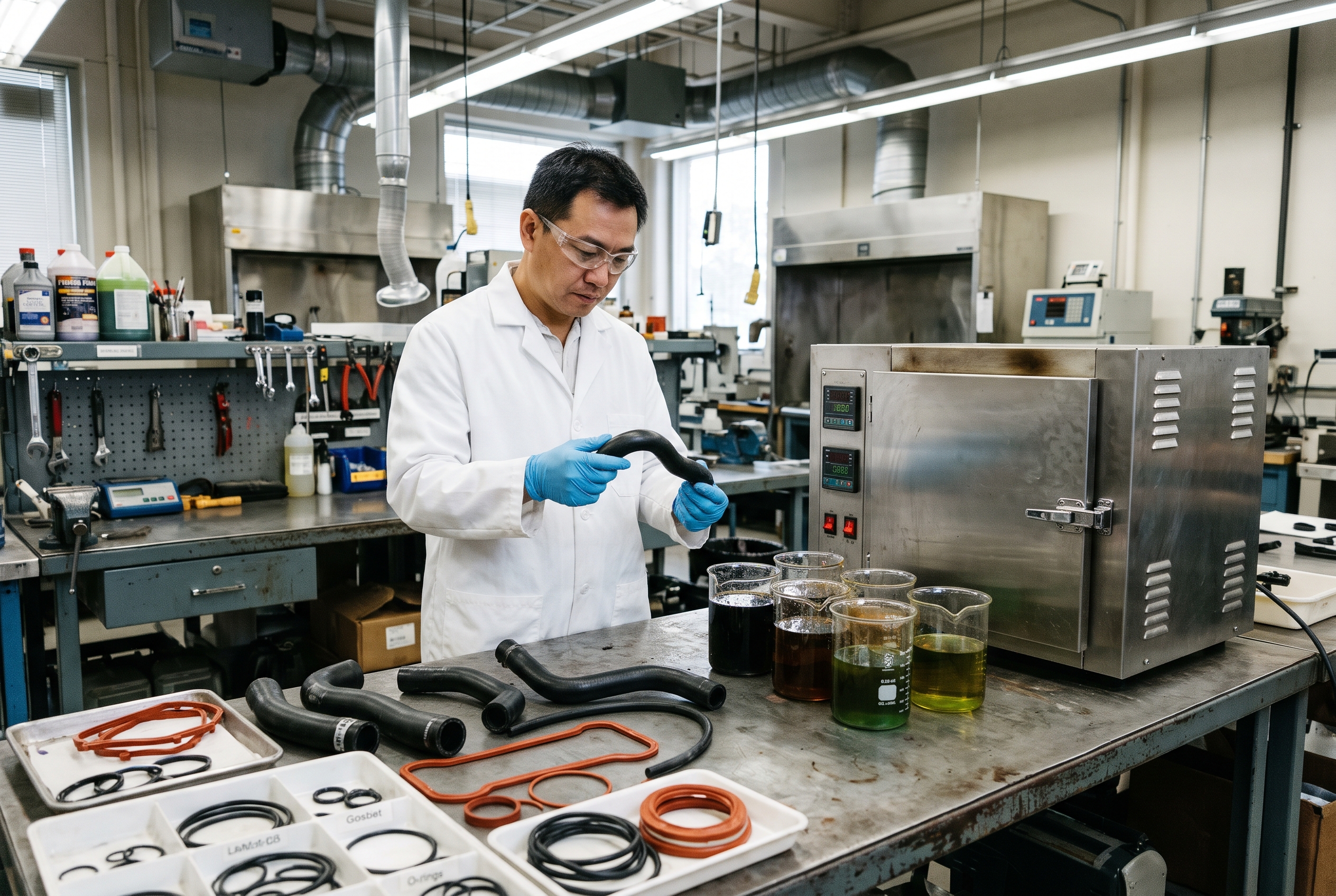
Modern engine bays and electric motor compartments expose rubbers, engineered polymers, and metal alloys to relentless heat, pressurized fluids, and continuous mechanical stress. Automotive testing provides the controlled laboratory protocols required to evaluate how these critical underhood components withstand extreme thermal and chemical exposure before vehicles enter full commercial production. By identifying structural degradation, fluid incompatibility, and premature seal hardening early in the design phase, component manufacturers prevent hazardous fluid leaks, costly warranty claims, and unexpected drivetrain breakdowns.
Underhood materials rarely fail from a single isolated factor. Instead, intense operating temperatures combine with aggressive synthetic lubricants and constant vibration to break down molecular bonds over time. Objective laboratory validation transforms material selection into a data driven engineering process that safeguards overall vehicle dependability.
Key Material Evaluations for Engine Bay and Drivetrain Components
Evaluating underhood longevity requires simulating the exact thermal, chemical, and physical loads encountered inside an active vehicle compartment.
- Fluid Immersion and Chemical Resistance: Flexible hoses, rubber gaskets, and O rings remain in constant contact with engine oils, automatic transmission fluids, brake fluids, and specialized coolants. Laboratory immersion procedures measure volume swell, surface hardness shifts, and tensile strength retention after prolonged exposure to heated automotive fluids.
- Thermal Oxidative Aging: Continuous exposure to elevated compartment temperatures gradually strips plasticizers from elastomers and thermoplastics, causing flexible seals to shrink or turn brittle. Accelerated oven aging replicates years of thermal cycling within weeks to confirm that polymers retain their sealing elasticity without cracking.
- Mechanical Fatigue and Compression Verification: Structural mounts, composite intake manifolds, and drivetrain brackets endure heavy torque loads and sudden thermal expansion. Universal mechanical testing machines measure tensile elongation, impact toughness, and compression set to guarantee safe load bearing margins across the operational lifespan of the vehicle.
Automotive Subsectors Dependent on Component Validation
Verifying underhood material integrity supports strict safety and reliability targets across diverse vehicle platforms.
- Internal Combustion and Hybrid Powertrains: Downsized turbocharged engines and tightly packaged hybrid bays generate concentrated radiant heat zones. Rigorous laboratory qualification ensures silicone intake hoses, timing belts, and polymer valves maintain airtight seals under sustained high temperature operation.
- Electric Vehicle Thermal Management Systems: Battery cooling loops circulate dielectric fluids and glycol mixtures through intricate manifold networks located directly beside sensitive electrical hardware. Confirming elastomeric seal compatibility prevents fluid seepage that could jeopardize battery pack insulation.
- Commercial Fleet and Heavy Duty Vehicles: Freight trucks and off highway industrial vehicles accumulate extreme operating hours across demanding tropical climates. Validating hydraulic line durability and suspension bushing wear resistance directly minimizes unplanned maintenance downtime.
Securing verified performance data prior to mass production protects automotive brands from expensive field failures and stringent regulatory penalties. By scheduling accredited automotive testing through Alstesting automotive testing services in Malaysia, component suppliers and regional manufacturers obtain the certified analytical insights required to prove material durability and satisfy global original equipment manufacturer standards.
Frequently Asked Questions (FAQ)
What does compression set testing reveal about automotive rubber seals?
Compression set testing measures the permanent deformation remaining in an elastomeric seal after it has been compressed under heat for a defined period and then released. A low compression set value confirms that the gasket will spring back and maintain a tight fluid barrier, whereas a high value indicates a serious risk of future oil or coolant leaks.
Why is heated fluid immersion necessary for polymer cooling components?
Coolants and lubricants behave far more aggressively at operating temperatures than they do at ambient room temperature. Heating the test fluid accelerates chemical absorption and additive extraction inside the polymer matrix, quickly revealing whether a hose or connector will swell, soften, or fracture inside a running engine bay.
How do international standards like SAE and ISO guide underhood material checks?
Standards such as SAE J20 for coolant hoses and ISO 1817 for liquid resistance establish uniform laboratory parameters for fluid temperatures, immersion durations, and specimen dimensions. Following these globally recognized methods ensures that material test reports from independent suppliers are directly comparable and readily accepted by major vehicle assembly plants.